Shaping a Greener, Smarter Future
ARCHITECTURAL GLASS IS TAKING CENTRE STAGE IN ENVIRONMENTALLY FRIENDLY DESIGN
The architectural glass market is growing rapidly as the global construction industry shifts toward more innovative, sustainable, and energy-efficient materials.
Once seen as just a decorative feature, glass has become a crucial part of modern architecture, offering practical benefits like energy efficiency and advanced technology. As the push for green building practices gains momentum worldwide, architectural glass is taking centre stage in environmentally friendly design.
With climate change being a key factor, governments around the globe are introducing tougher energy efficiency regulations to cut carbon emissions. Glass is stepping up to meet the challenge. Technologies like low-emissivity (Low-E) glass are making buildings more energy efficient by reducing heat transfer. These advancements aren’t just about saving energy, they’re about reimagining how we design spaces for a greener future.
Smart Glass Evolution
The landscape of modern architecture revolves around concepts of sustainability and a return to form. Eco-friendly practices, use of smart materials, adaptive and reactive elements and a penchant for indoor-outdoor living are some of the prevalent proclivities in design today. The use of smart glass is a culmination of these ideas in a neat package.
Biophilic Design aims to reinforce the connection a building and its denizens might have with the surrounding nature.
Rooted in concepts of indoor-outdoor living, biophilic design takes this approach to the next level by using natural elements, directly or indirectly, to bring the environment inside the building spaces. One of the easiest ways of achieving this design philosophy is to use glass. Transparency of glass, coupled with the many technological advancements surrounding it, creates an opportunity for architects to truly meld the interior space with the exterior space. However, the use of glass also costs privacy, and in many cases, creates a higher energy cost in heat regulation as it has historically not been as practical for insulation
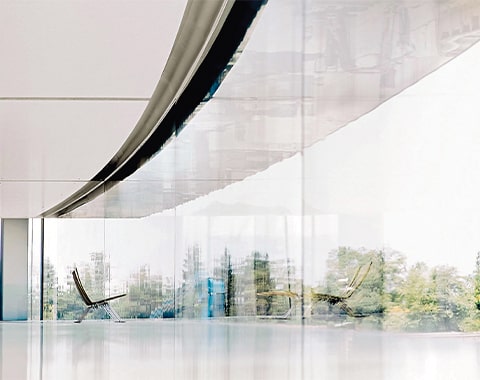
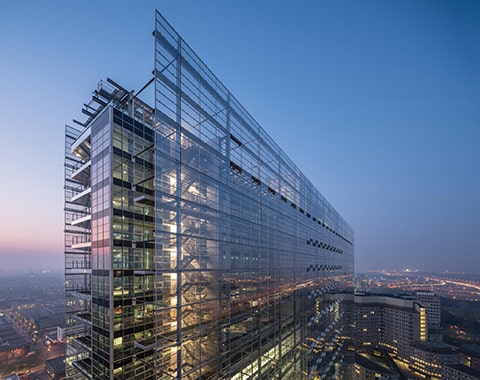
Smart glass removes that cost and instead allows for a seamless and dynamic control of interior lighting and heat by changing its transparency. A pioneering player in the field of smart materials, smart glass elements respond to contemporary questions of architecture about sustainability, innovation, and functionality, all the while allowing for interesting visual elements.
Capable of dynamically adjusting opacity in order to control heat and light regulation, it also allows for more privacy. These smart glass elements allow for designers to blur the lines between interior and exterior spaces, while being able to fine tune elements such as interior temperature and levels of natural light… Currently, there are two main types of smart glass: electrically switchable smart glass and thermochromic smart glass.
Thermochromic glass uses phase-changing polymers that respond to heat, usually from the sun, becoming opaque to regulate temperature and lighting. Electrically switchable smart glass, or electrochromic glass, uses bursts of electric pulses to change its opacity.
"Once seen as just a decorative feature, glass has become a crucial part of modern architecture, offering practical benefits like energy efficiency and advanced technology. As the push for green building practices gains momentum worldwide, architectural glass is taking centre stage in environmentally friendly design. "
Glass has been a prominent material used in architecture for a long time, however, recent technological advancements have allowed it to be used in truly innovative ways, even in climates where it wasn’t always as practical to use. Either as regular windows or a facade, smart glass provides innovative and functional solutions to the majority of design issues faced by architects in the modern age. The future of architectural glass is bright, with technology and sustainability shaping its evolution. Smart glass, with its ability to adapt to changing light and heat, is set to redefine how we design and use buildings. Meanwhile, innovations in manufacturing are making glass even more sustainable and versatile.
As construction scales up globally and the emphasis on green building intensifies, the demand for advanced glass solutions will continue to rise. For businesses and industry leaders, investing in cutting-edge glass technologies isn’t just an opportunity, it’s a way to meet the growing call for innovation and sustainability in the built environment.
Electrochromic Glass: Revolutionising Modern Architecture
Electrochromic glass, often referred to as “smart glass,” is an intelligent glazing solution that can change its tint and reflective properties in response to external conditions. By applying a low-voltage current, this dynamic material adapts to temperature, sunlight, and room occupancy. It can operate automatically, under manual control, or in a hybrid mode, offering unparalleled versatility.
Embedded with advanced sensors, the glass constantly monitors sunlight, occupancy, and the solar angle. Using this data, it determines the most suitable mode, Glare Mode, Daylight Mode, Clear Mode, or Tinted Mode, or each pane of glass based on its position and orientation.
For example, in a building equipped with electrochromic glass, the east-facing windows may activate Glare Mode during the morning to minimise discomfort, while other areas remain clear to optimise daylight. As the day heats up, the system transitions to full-tint mode to reduce cooling demands. By evening, the west-facing windows tint to block glare from the setting sun, while others clear to maximise light.
In essence, electrochromic glass ensures that interiors remain comfortable while exteriors retain their visual appeal. Beyond its aesthetic and functional advantages, electrochromic glass significantly enhances energy efficiency. By reducing the building’s energy consumption by up to 20% and peak cooling demands by up to 30%, it lowers electricity costs while minimising the need for blinds and shades. Additionally, its advanced fading protection ensures durability and longevity.
This energy-saving innovation is also a boon for green building certifications. Installing electrochromic glass can earn a building up to 12 LEED points, the highest achieved by any single technology. It also increases the property’s rental and resale value, making it a savvy investment for developers.