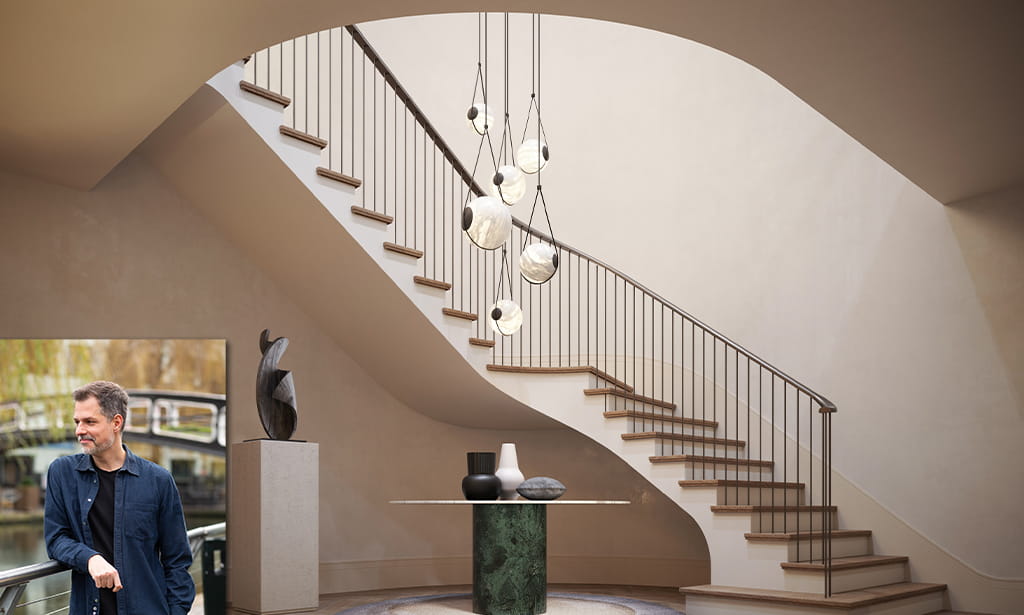
An interview with Toni Buzolic and Nora Galimberti, The Boundary
What role does architectural visualisation play in shaping the future of property design and development?
Architectural visualisation plays a pivotal role in shaping the future of property design and development by bridging the gap between concept and experience. It allows stakeholders to make better, faster decisions – from design refinement to investor buy-in – by presenting ideas in an emotionally engaging way. As technology advances, visualisation is becoming more than a presentation tool; it’s influencing how spaces are conceived, tested, and marketed. In high-end residential, especially, it helps define the lifestyle narrative early on, setting a benchmark for quality and ambition.

Toni Buzolic
Chief Creative Officer at The Boundary

Nora Galimberti
Senior Associate at The Boundary
How has the demand for high-quality visualisations evolved in the real estate and architecture industries?
The demand for high-quality visualisations has grown significantly over the past decade. As clients and investors have become more visually literate and digitally savvy, expectations have risen. They now want to experience the space before it’s built, not just understand it. This means visualisations must deliver not only photorealism, but also emotional impact, storytelling, and lifestyle cues. Clients now expect more than static renders – they want immersive, emotionally engaging experiences that allow them to ‘feel’ the space before it’s built. The rise of real-time rendering is accelerating this shift, enabling interactive, cinematic presentations that transform how designs are reviewed, marketed, and sold. Visualisation has become not just a communication tool, but a strategic asset.
What are the key elements that make an architectural rendering truly stand out?
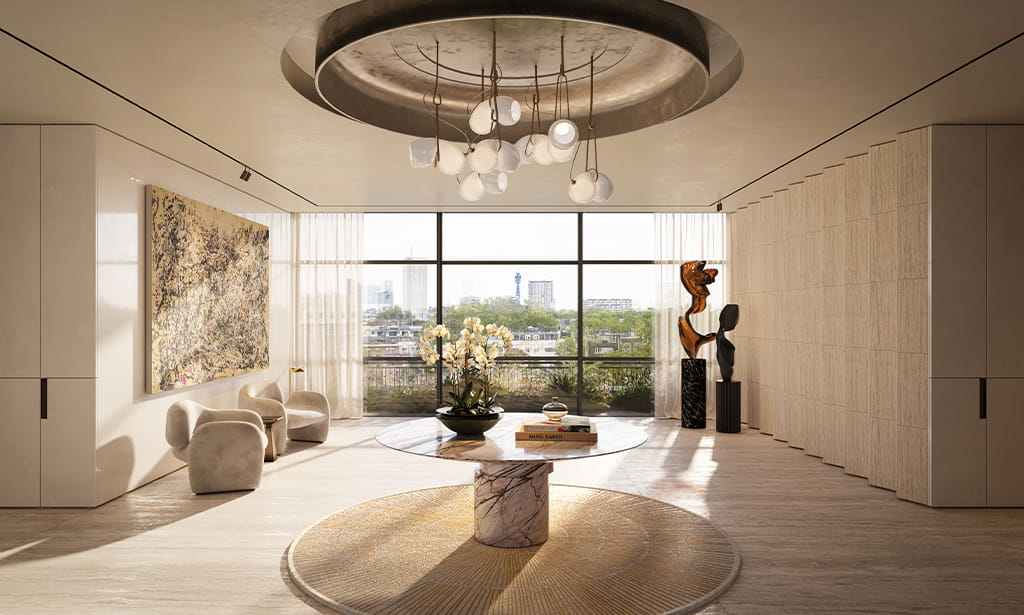
Our approach is to aim for a photographic look. Once lighting and composition are nailed down, the foundations are strong enough for us to develop a narrative that conveys emotions subtly yet powerfully. This is what stands out – what people feel when looking at our content.
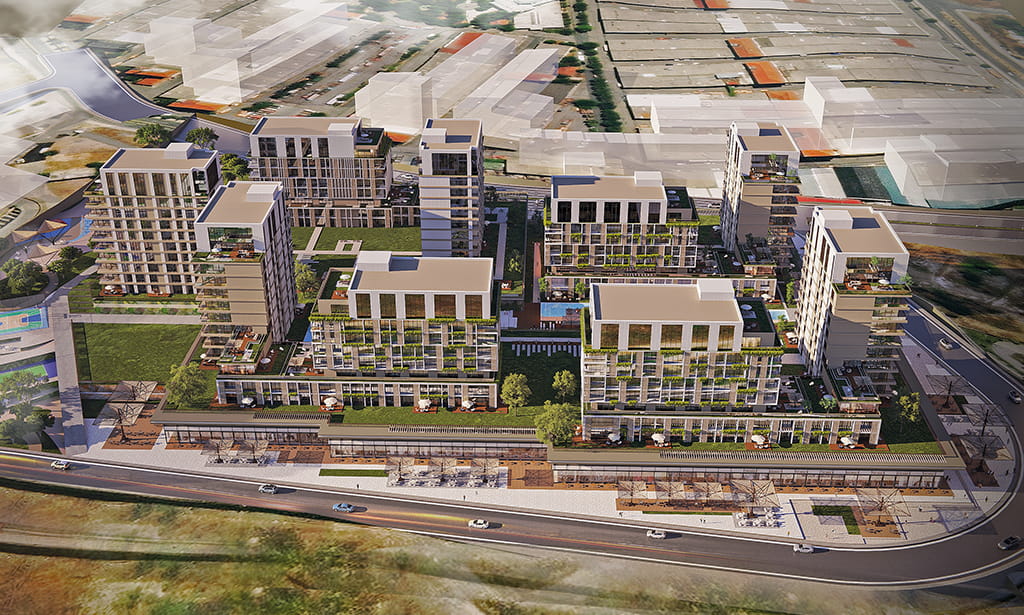
Partnering to work on an iconic project like The Whiteley, there is already a plethora of history attached to it, with a story to be told. Architectural quality and heritage formed the focus of the proposal and design process, driven by the retention of the historic Queensway façade. Understanding that visuals were required to not only highlight the redevelopment but also to bring it back to life in a new light was a key concept from the start. This ensured we were able to craft the right atmosphere and what it is set to be.

How do you see technology, such as AI and VR, influencing the future of architectural visualisation?
Technological advancement is inevitable and has to be embraced. I see each new development as an exciting opportunity to speed the image-making process up, so creatives have more space and time to focus on what they enjoy and excel at doing.
We are building and implementing our own proprietary AI tools that are safe to use from an intellectual property perspective and effectively enhance the user experience. AI is just another tool, one that is quickly growing and it will be key for our industry to be ahead of the curve.
VR, on the other hand, is not the major industry player that we expected it to be, especially in marketing and sales content. After the initial excitement, it seems like clients are not too keen to explore their product in an isolating and “gamey” environment, not to mention the motion sickness. Real-time content is better conveyed through more traditional media, online and offline, like tablets and touch screens. Our team is constantly working on ways to improve the quality of real-time rendering and leveraging the possibilities of it.
What advice would you give to firms looking to leverage visualisation for competitive advantage in property awards and marketing?
For firms aiming to stand out in awards and marketing, especially in the high-end residential space, my advice is to invest in top-tier visualisation that goes beyond just accurate representation. The imagery should feel aspirational – capturing not only the architecture but also the emotion, lifestyle, and exclusivity the design promises. When done well, visualisation becomes a strategic storytelling tool, delivering cinematic, photoreal visuals that are indistinguishable from reality and resonate deeply with discerning audiences, juries, and potential buyers alike.